
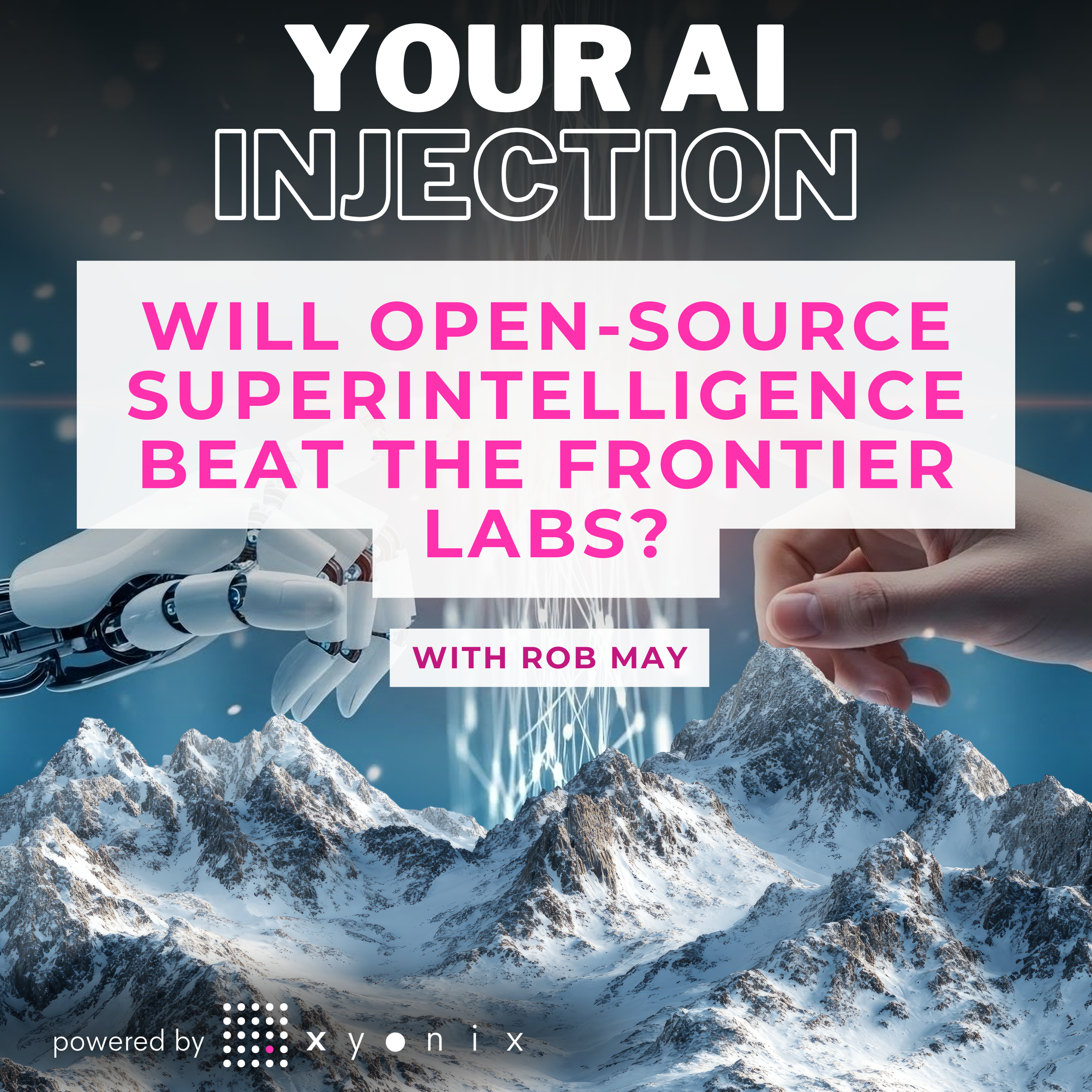



In this episode of Your AI Injection, Deep Dhillon sits down with Rob May, CEO of Neurometric, to challenge one of Silicon Valley's favorite assumptions, that whoever builds super-intelligence first gets to keep it. Drawing on over a decade of AI investing and two prior startups, Rob lays out a public prediction he's willing to stand behind. He believes that once any lab crosses the threshold into true super-intelligence, open source versions will follow within months, not years. The two also get into the "jagged frontier" of AI capability, the strange reality that today's most powerful models can be brilliant at one task and shockingly bad at the next, and what that means for how companies actually deploy AI. There's also a simpler question underneath it all. If AI keeps getting cheaper and easier to use, will we just find more excuses to use it, whether we need it or not? -[LISTEN] [SUBSCRIBE: YouTube, Spotify, Apple Podcasts]
Can You Sue Your Chatbot? The Legal Fight Reshaping AI Liability with Jai Jaisimha of Transparency Coalition.AI
In this episode of Your AI Injection, host Deep Dhillon talks with Jai Jaisimha, founder of Transparency Coalition.AI, about what it would actually take to hold the AI industry accountable. Jai explains why protecting kids is his top priority, especially as companion chatbots quietly become confidants for millions. He shares one tragic case that's become a rallying point for new legislation: a chatbot conversation that started as homework help and spiraled into self-harm. -[LISTEN] [SUBSCRIBE: YouTube, Spotify, Apple Podcasts]
Building Ethical AI with Dr. Brian Green
In this episode, we find out how social media algorithms can encourage negative thinking and how tech companies can create ethical AI during the product design process. We also touch on the ethical dilemmas in self driving cars, autonomous weapons and more. [LISTEN] - [SUBSCRIBE: YouTube, Spotify, Apple Podcasts]
Detecting and Mitigating Societal Bias in AI
AI models are now being used to make life altering decisions in areas such as healthcare, hiring, lending, university admissions and criminal justice.However, there are many high profile examples where AI has been shown to produce unfair, inequitable and exclusive decisions. In this episode of our podcast, data scientists at Xyonix talk about how to prevent societal biases from creeping into machine learning models. [LISTEN] - [SUBSCRIBE: YouTube, Spotify, Apple Podcasts]


